

Small Living Space Design: 5 Japandi Principles for Maximum Space & Style (2026 Guide)
Disclaimer: This post contains affiliate links, which means we may earn a small commission if you purchase through them. As an Amazon Associate, we earn from qualifying purchases. This commission comes at no extra cost to you. We only recommend products we genuinely believe will help you achieve the Japandi aesthetic in your small space.
Introduction: The Small-Space Designer's Secret Weapon
Welcome to the ultimate guide for mastering urban living room design. If you live in a Singapore HDB, a compact condo, or any tiny apartment, you know the challenge: how do you achieve sophisticated style without overwhelming your limited square footage? The answer is not in filling space—it’s in shaping how you move through it
The solution lies in the elegant fusion known as Japandi. This design language offers a structured, clutter-free approach that ensures your limited square footage feels expansive, serene, and designed with purpose
Japandi is the best design style for small living spaces because it enforces functional minimalism (Scandinavian utility) and intentional clutter control (Japanese Zen), ensuring every piece of furniture earns its place and maximizes perceived space. This intentionality is the secret to making your small home feel spacious and stylish, guaranteed
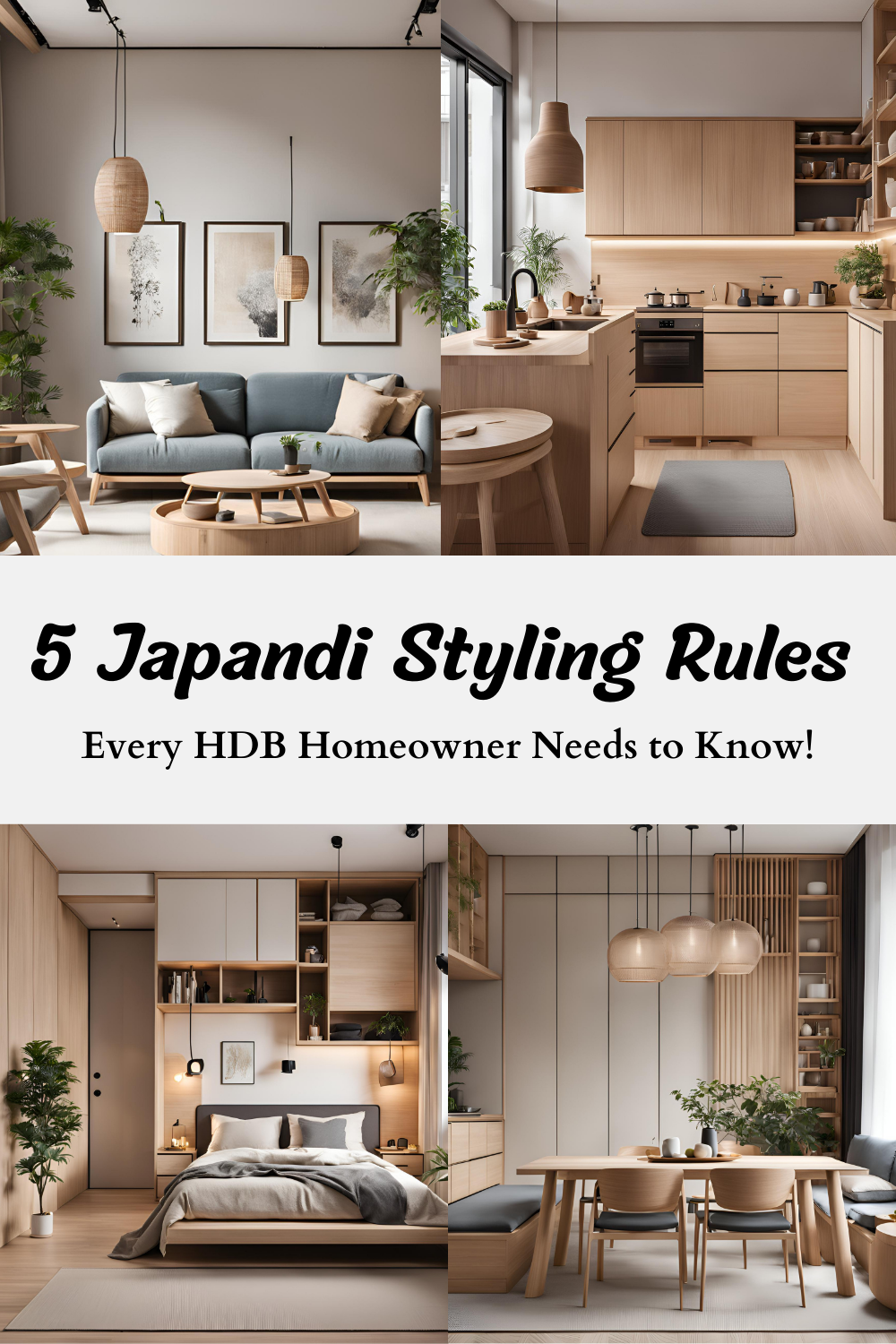
Serene apartment featuring Japandi design with natural wood furniture and neutral color palette.
Principle 1: The Power of Neutral Exhale (Color & Texture Strategy)
To make any small living room feel larger, you must prioritize visual rest. Japandi limits the palette to natural, earthy tones.
Designer’s Tips:
The Japandi palette forms a quiet backdrop: Start with a light neutral base (soft white or sand), pair it with a dominant warm wood tone (like light oak ), and use deep charcoal or black details for necessary contrast
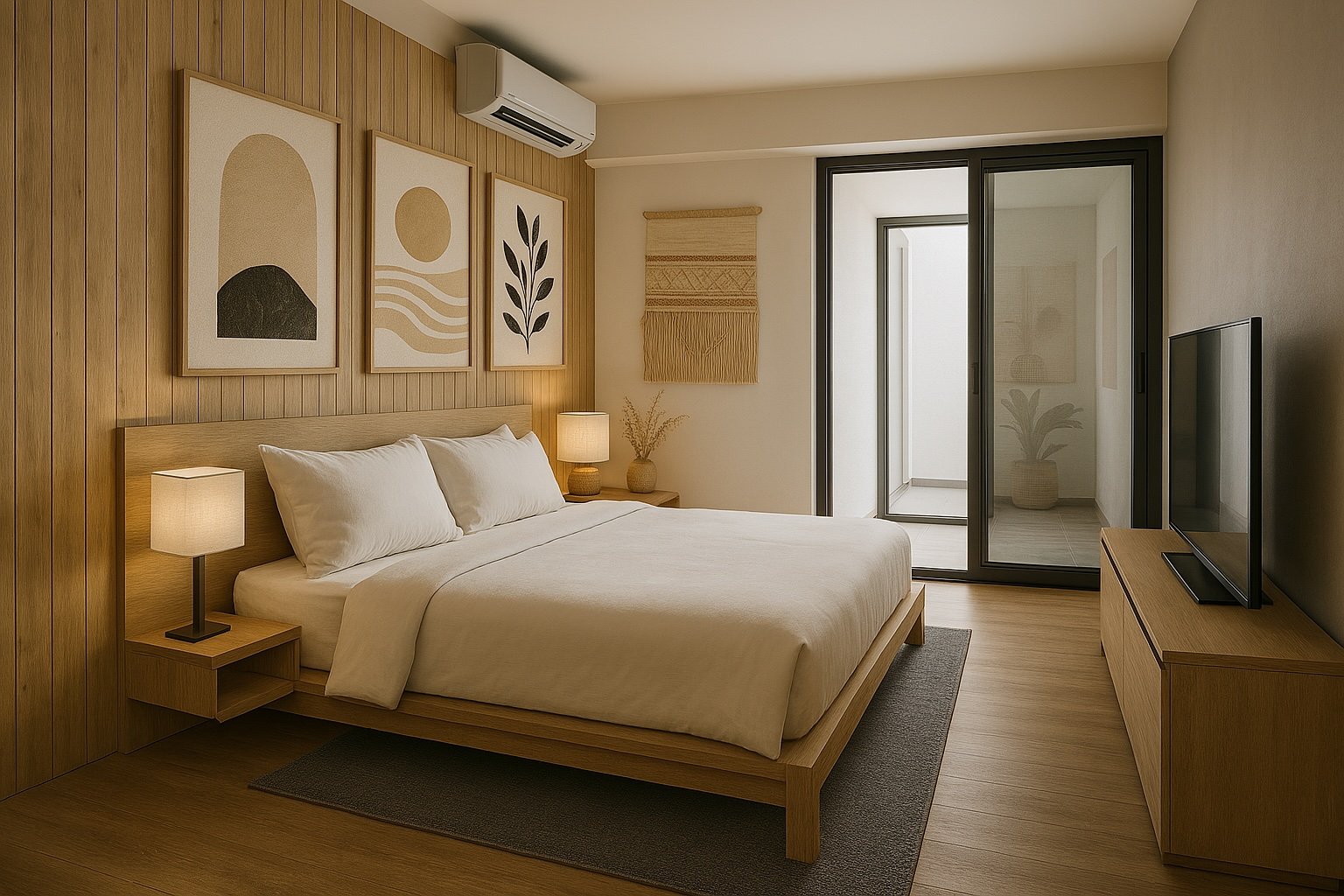
Japandi master bedroom with combination of light oak, warm lighting, and black window frames for contrast
Choosing Your Light Neutral Base (Maximizing Reflected Light)
Forget sterile, cold white. The best Japandi neutrals have a soft, warm undertone—like Nippon Paint’s Genteel or Sandcastle. These tones feel warmer than stark white, preventing your small room from feeling cold. Matte paint is the critical choice, as it softens light and avoids the harsh glare of high-gloss finishes For specific HDB palettes and recommended Nippon Paint colors, download our free guide: [Designing Your 4-Room BTO eBook (FREE DOWNLOAD)].
When selecting flooring, use light-reflecting materials like large grey ceramic tiles (HAFARY Element Ceramic ST65113N) in the living area for a seamless, expansive look. For a full palette guide, see our resource: The Ultimate Small Apartment Color Palette Guide.
Layering Texture for Visual Warmth (Bouclé, Linen, Jute)
In functional minimalism, texture is your substitute for pattern. You must layer organic textures—wood, linen, rattan, and stone—to bring depth without visual clutter.
Use thick bouclé on pillows, raw linen on curtains, and chunky wool or jute underfoot.
The right rug is essential for Soft Zoning—defining the seating area without walls. We recommend a flat-woven Jute Area Rug—it adds texture, grounds the space, and is low-maintenance. [Check out our selection of highly-rated Jute Rugs on Amazon]
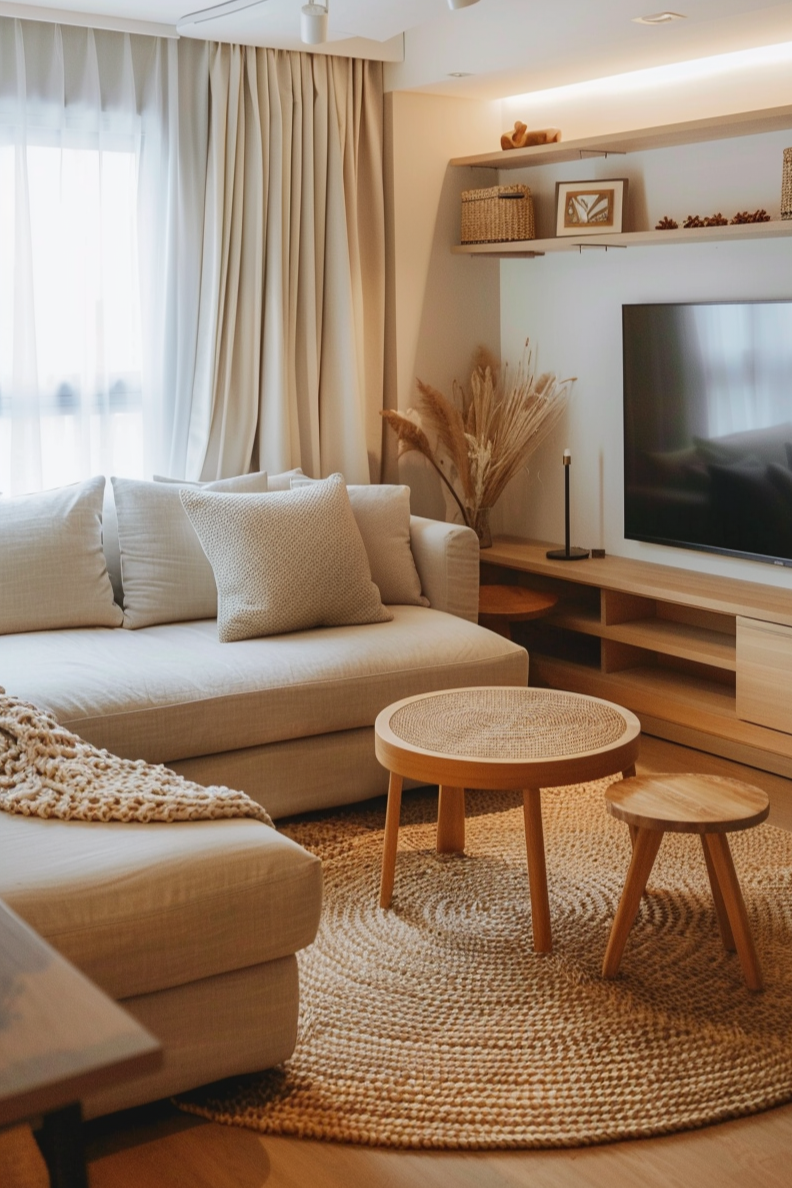
A flat woven jute rug for soft zoning and combine with thick bouclé on pillows
Principle 2: Furniture That Earns Its Place (The Multifunctional Mandate)
This is where the 'Small Space' strategy meets Japandi design. Every large piece must be functional, beautiful, and strategically selected. The two key criteria are low-profile and multi-purpose.
Designer’s Tips: Prioritize low-slung sofas with exposed legs and storage furniture that nests or folds, leaving as much floor and wall space visible as possible.
The Low-Profile Sofa Advantage (Maximizing Perceived Height)
A bulky, high-backed sofa can cleave a small room in half. Japandi sofas sit low to the ground with clean lines and exposed wooden bases. This preserves the vertical sightline from the floor up, making your ceilings feel noticeably higher—a technique that visually enhances the flow of light.
The Best Multifunction Sofa with Japandi Style
We have vetted three small-footprint sofas that align with Japandi aesthetics and small-space function:

Minimalist Sofa and Daybed
Sofa Linen Modular
Key Japandi features: Neutral linen, exposed wood base, simple structure.
Small Space Benefit: Reconfigurable; can split into two chairs or combine into a chaise lounge.Sofa with Storage Ottoman
Key Japandi features: Clean lines; durable, low-maintenance upholstery.
Small Space Benefit: Hidden storage beneath the chaise—perfect for blankets or seasonal decor.Sofa and Minimalist Daybed
Key Japandi features: Low-slung, simple frame; functions as a bench or small sofa.
Small Space Benefit: Doubles as a dedicated sleeper for occasional guests.
Japandi Coffee Tables That Nest and Hide
Avoid bulky, visually heavy tables. Use nesting tables or a round dining table, which softens the layout and improves flow. This adheres to the principle of only displaying what is needed at that moment.
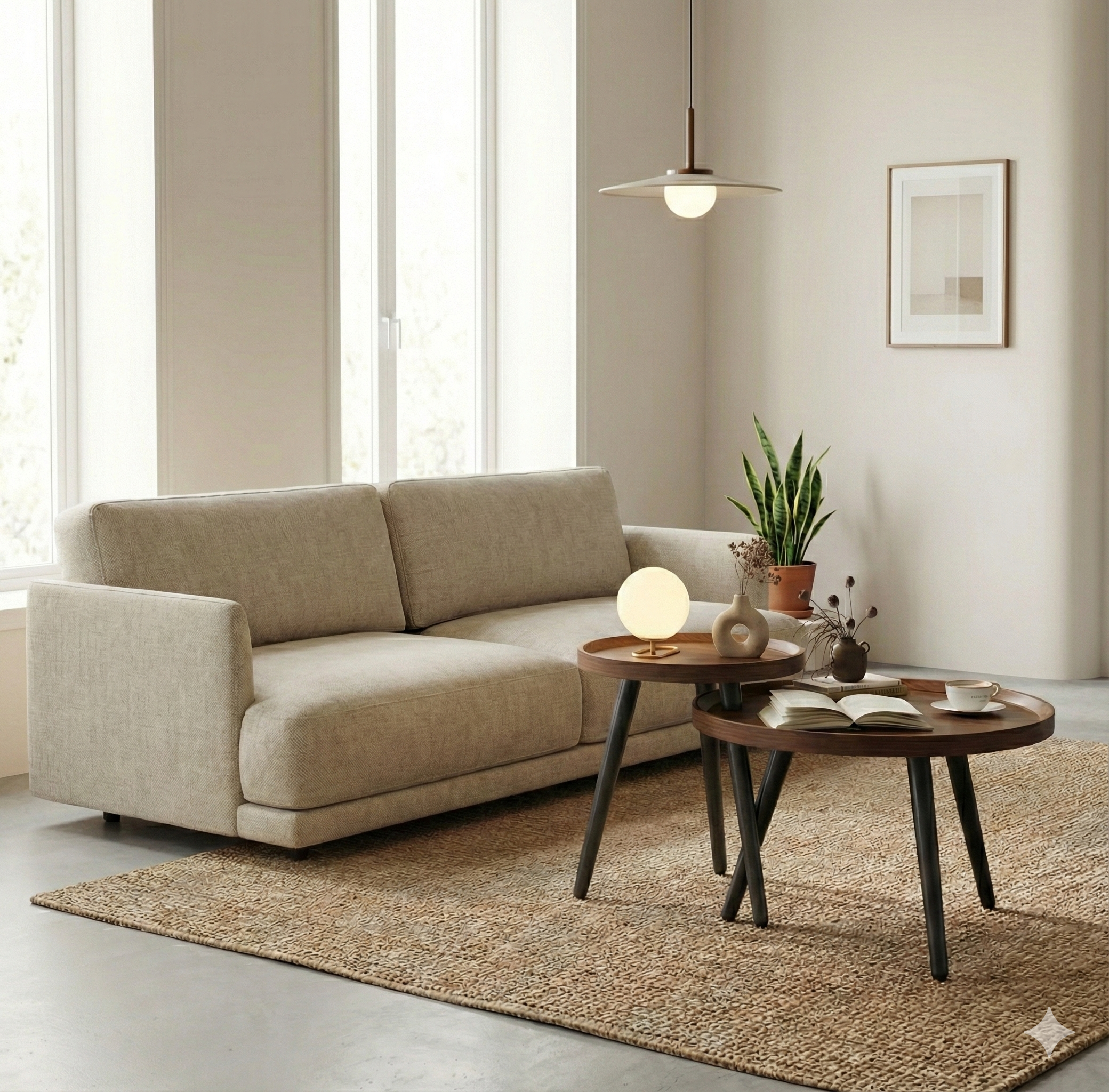
Get this beautiful, round and minimalist nesting table at Amazon
Principle 3: Wabi-Sabi in the Details (Intentional Decor & Craftsmanship)
Japandi embraces Wabi-Sabi, celebrating balance. This means the objects you do display must have meaning, warmth, and texture
Designer’s Tips: Decorate with three core elements only: natural textures, imperfect craftsmanship (ceramics), and calming greenery.
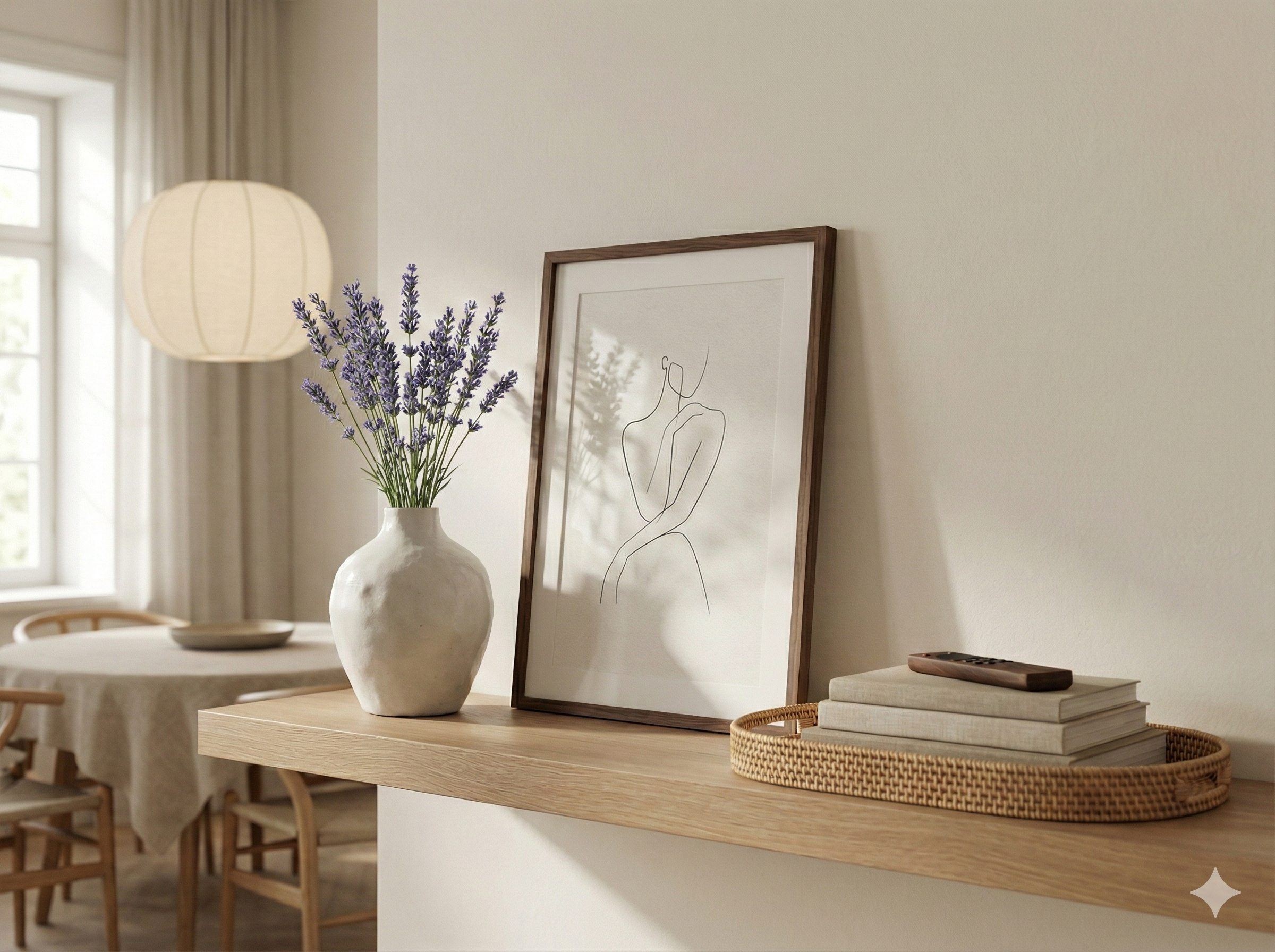
Give life to your floating shelf with a ceramic vase, minimalist art, and wooden tray
Curating Your Decorative Trio
Do away with cluttered gallery walls. Select one of each:
A sculptural ceramic vase: Look for pieces with a handmade, slightly imperfect glaze.
A single piece of framed minimalist line art: Simple framed prints reflect calm or nature.
One woven wooden tray: Used to corral remote controls and small items, keeping surfaces immediately clutter-free.
Principle 4: Embrace the Vertical, Free the Floor (The Storage Strategy)
This principle is about designing space that breathes. Vertical height is an asset in compact Singapore homes
Designer’s Tips: Maximize wall space with floating shelves and vertical units, keeping the floor clear to enhance flow
Wall-Mounted Solutions for Japandi Display
Floating shelves and low-profile media consoles in light wood tones allow the eye to travel across the floor uninterrupted. This aligns with creating a natural flow where air and light move freely. For more of Small Space Living Room Ideas, check our resources here.
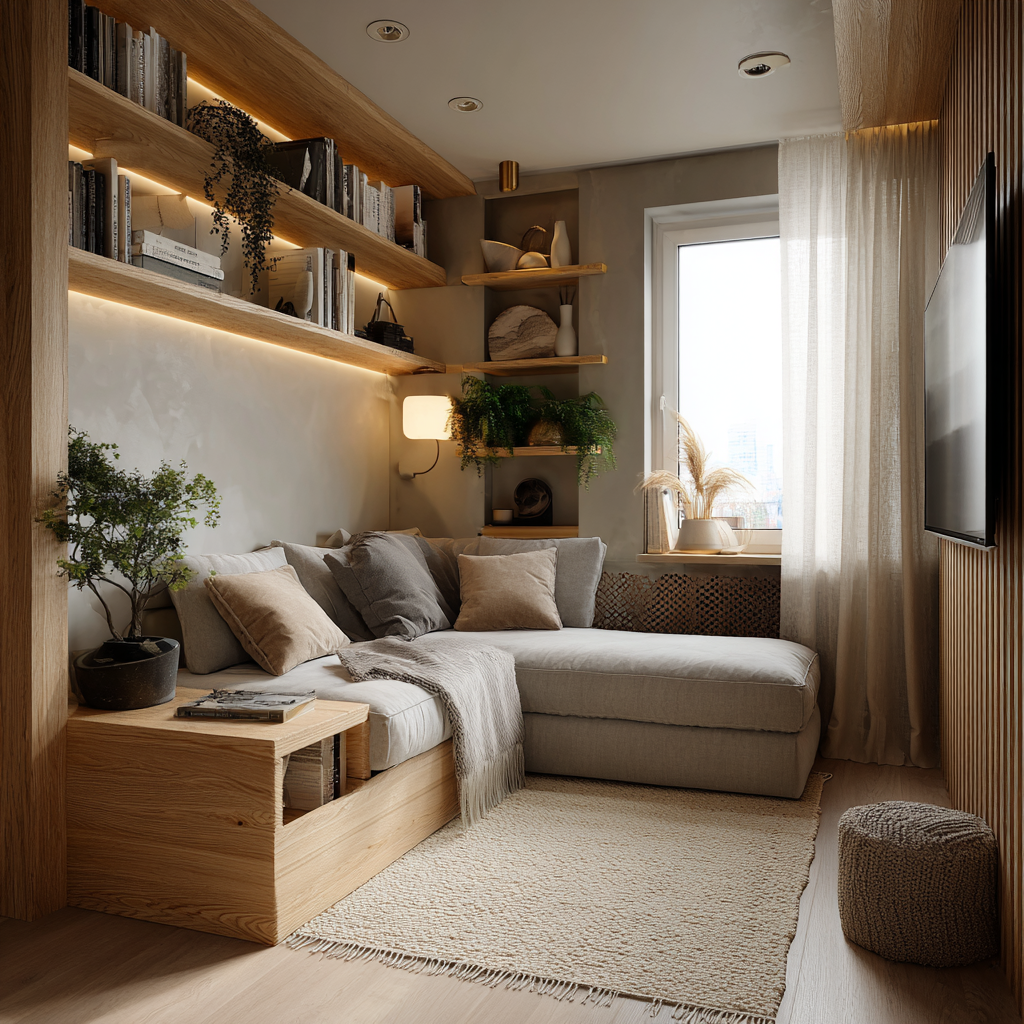
Wall mounted floating shelves
Hidden Clutter: The Japandi Art of Concealment
Use closed cabinets for storage. Use woven baskets and storage ottomans to hide everyday mess.

Use a closed shoe cabinet to hide the mess and combine with wall mounted mirrors in the narrow hallway
Architectural Impact of Modular Furniture
In BTO and condo renovations, overspending on custom carpentry is common. Our approach embraces modular furniture (like IKEA’s systems) which provides flexibility and keeps costs low , perfectly aligning with the minimalist aesthetic
For renovation inspiration on a budget, review our detailed guide on Stylish Apartment Renovation Ideas without Custom Carpentry.
Principle 5: Lighting as the Invisible Design Element (Warmth and Mood)
Japandi design relies heavily on light, ensuring it is never harsh but soft, layered, and intentional. Light is the invisible element that turns space into feeling.
Designer’s Tips: Finish the room by introducing deliberate natural elements, soft, layered lighting, and neutral textiles to ensure quiet depth
Layered Lighting for Everyday Mood
Ambient: Ceiling lights for gentle brightness.
Task/Focus: Pendant lamps above the dining area.
Intimacy: Floor or table lamps to add warmth and intimacy.
Avoid overlighting—embrace shadows and soft contrast. Natural textures glow beautifully under warm light
Budget Snapshot: Designing Under Constraint
Great design shouldn't be exclusive. Our approach to Japandi proves you don't need costly built-ins. Tracking your budget by room allows you to prioritize high-impact areas like the living room.
Cost Saving Tip: Opting for modular furniture instead of custom carpentry is one of the easiest ways to keep your budget low.
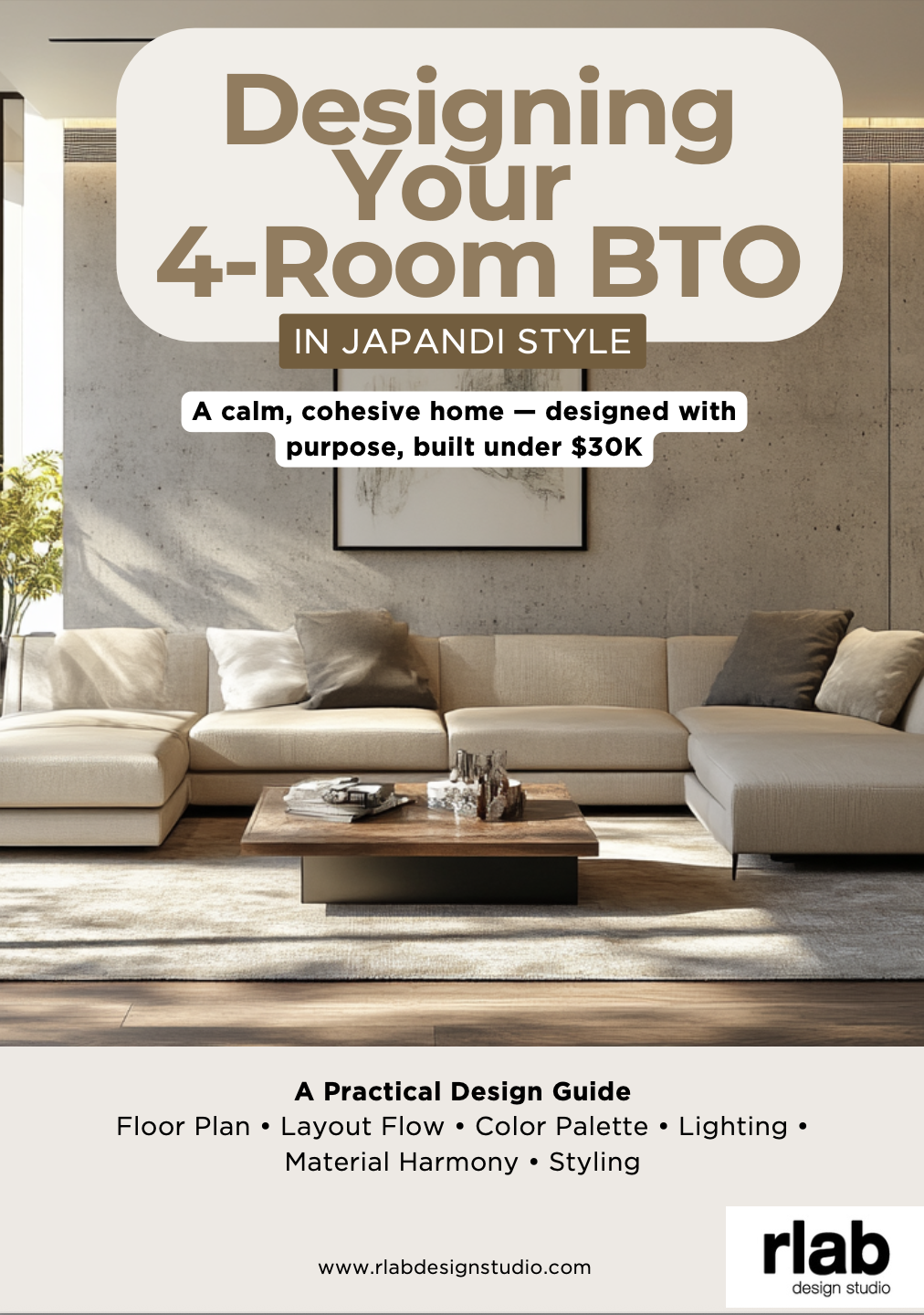
Your Next Steps for a Cohesive Home
HIGH-VALUE FREE DOWNLOAD: Get the ultimate budget and material guide! For a complete, room-by-room design plan, floor plan layouts, and a full budget snapshot for a 4-Room BTO under $30,000, [DOWNLOAD OUR FREE EBOOK: Designing Your 4-Room BTO in Japandi Style].
For a custom design plan that optimizes your specific HDB or condo layout, [Inquire About Our Virtual Design Consultation Service Today].
